7 Reasons Boil-and-Bite Snore Guards Fail — and What Everyone is Using Now
If you've cycled through pharmacy trays and homemade fixes with zero results, the problem isn't you — it's a design that never moved your lower jaw at all.

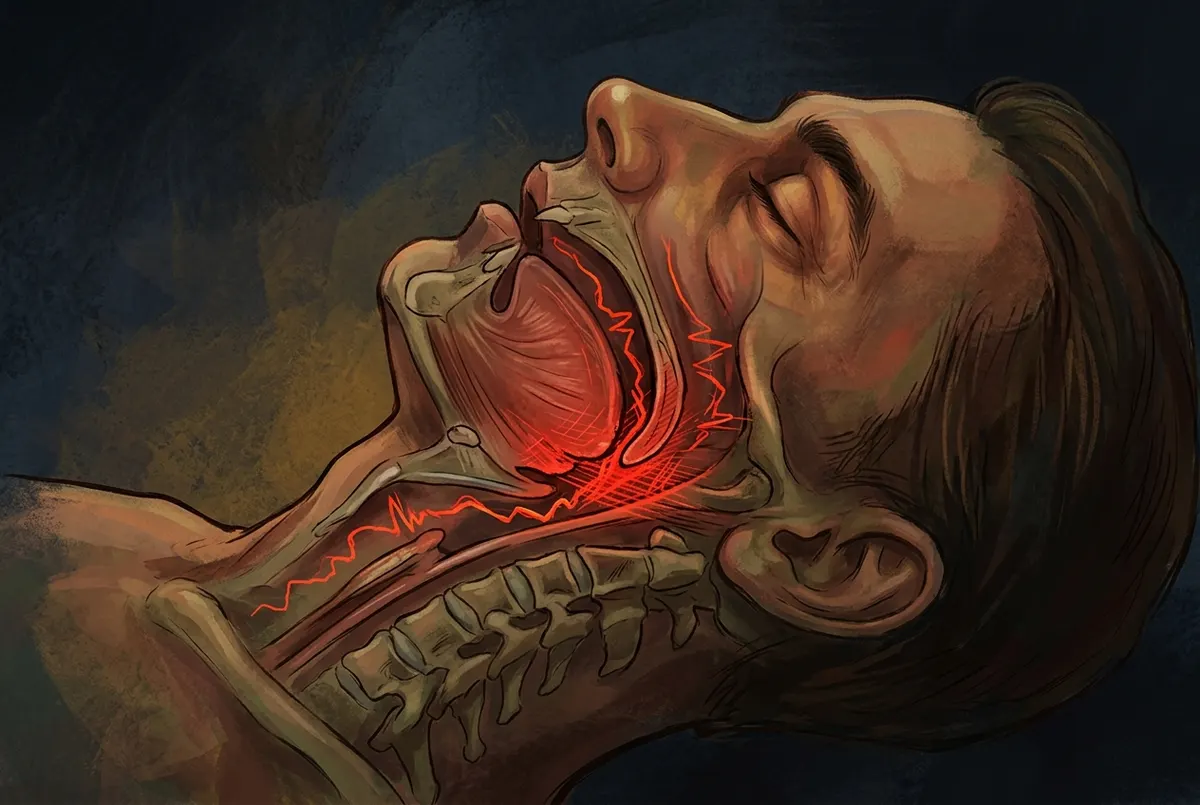 😮💨 Breathe All Night
1
😮💨 Breathe All Night
1
Most Guards Stop You Breathing Comfortably Through Your Mouth
Cheap boil-and-bite guards lock your jaws together in one solid block. Your mouth can't open, your jaw can't shift side to side, and if your nose is even slightly blocked — allergies, a cold, dry air — you're stuck breathing around a piece of plastic that feels like it's choking you. The smarter designs split into two separate arches so your mouth can open and close naturally all night. You breathe. You swallow. You don't wake up gasping at 3am because your airway feels sealed shut.
See How It Opens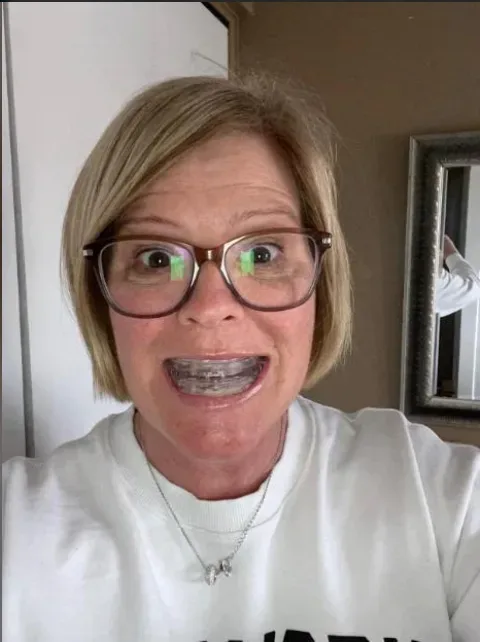 💤 Forget It's There
2
💤 Forget It's There
2
One-Block Guards Feel Packed Full — And That's Why You Quit
The bulk is unbearable. A single thick slab jams your teeth apart, fills your whole mouth, and makes your jaw ache by morning. 80% of people stick with a device they can actually tolerate; most quit a bulky guard by night three because comfort decides compliance. The devices that work long-term use a compact dual-arch profile — two slim pieces instead of one block, so the whole thing all but disappears once you're asleep. If you can't wear it, it can't work.
See a Custom-Fit Option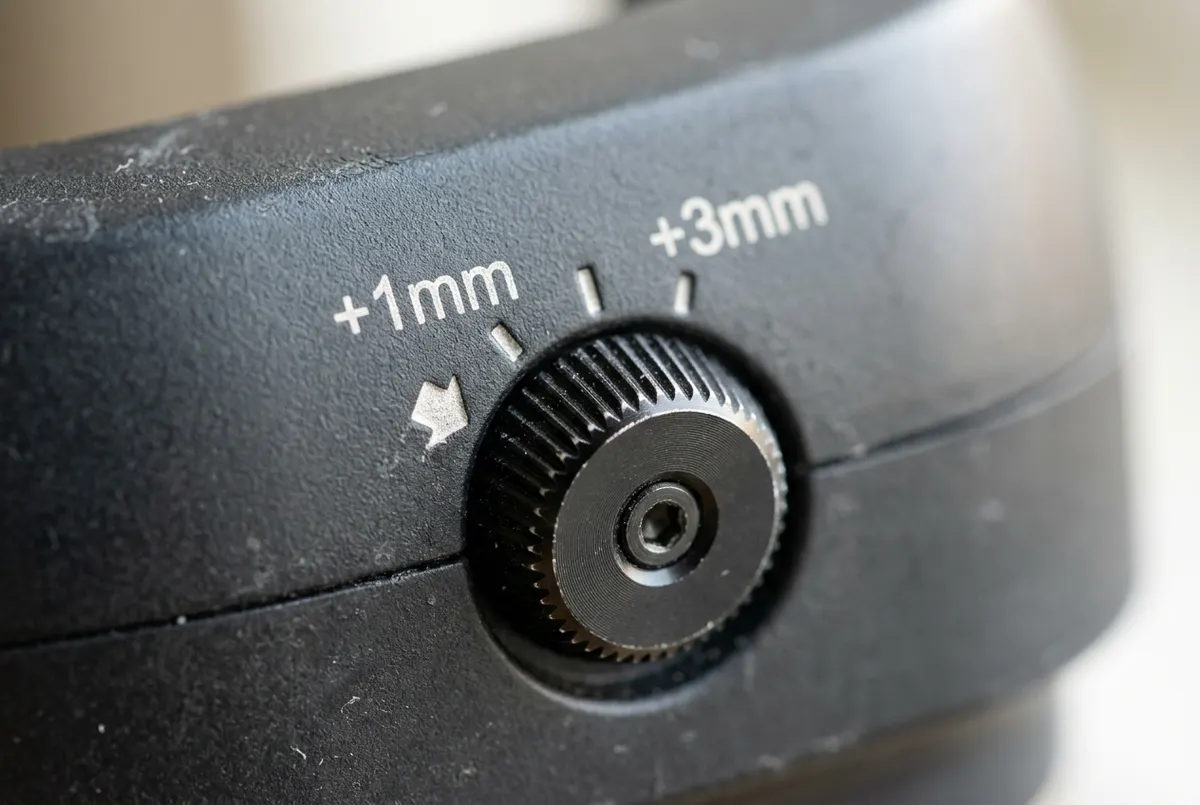 🎯 Dial It In
3
🎯 Dial It In
3
Adjustability Is the Line Between Silence and No Change
How far your jaw needs to come forward is different for everyone — a couple of millimetres can be the difference between 96% fewer snores and zero improvement. Fixed pharmacy guards give you one position with no way to tune it. If that position isn't right for your anatomy, you're out of luck. The better-built devices in this category offer click-in advancement settings — start gentle at +1mm, move to +3mm if needed, dial in the exact spot where your airway opens and the snoring stops. Adjustability isn't optional. It's how you find what actually works for your jaw.
Find Your Fit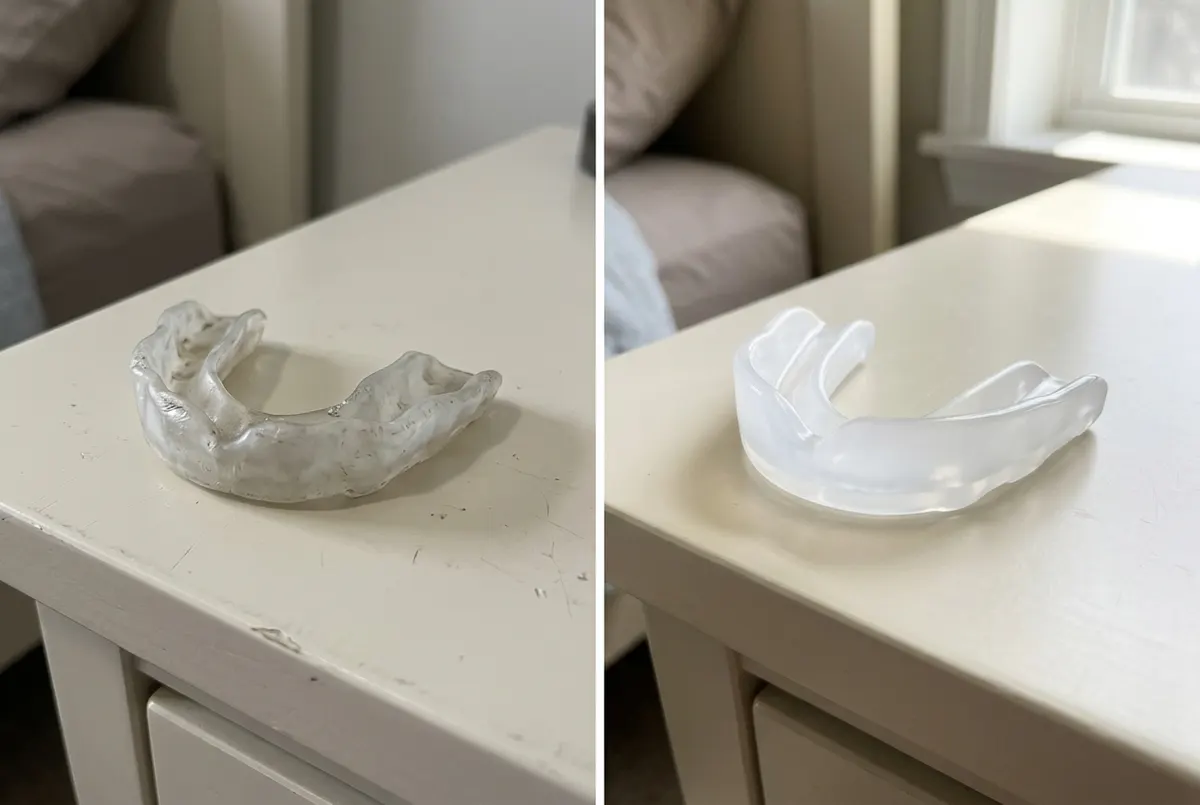 ⏱️ Lasts 6+ Months
4
⏱️ Lasts 6+ Months
4
Soft Plastic Loses Its Grip in Weeks
Cheap drugstore material goes slack fast. It stops holding the jaw where it belongs — often within a few weeks — and you keep wearing it assuming it still works while your snoring quietly comes back. Durable designs hold their advancement for six months or more with proper care, which is the difference between a device that works tonight and one that worked last month. If the material can't maintain position, the results evaporate.
See the Difference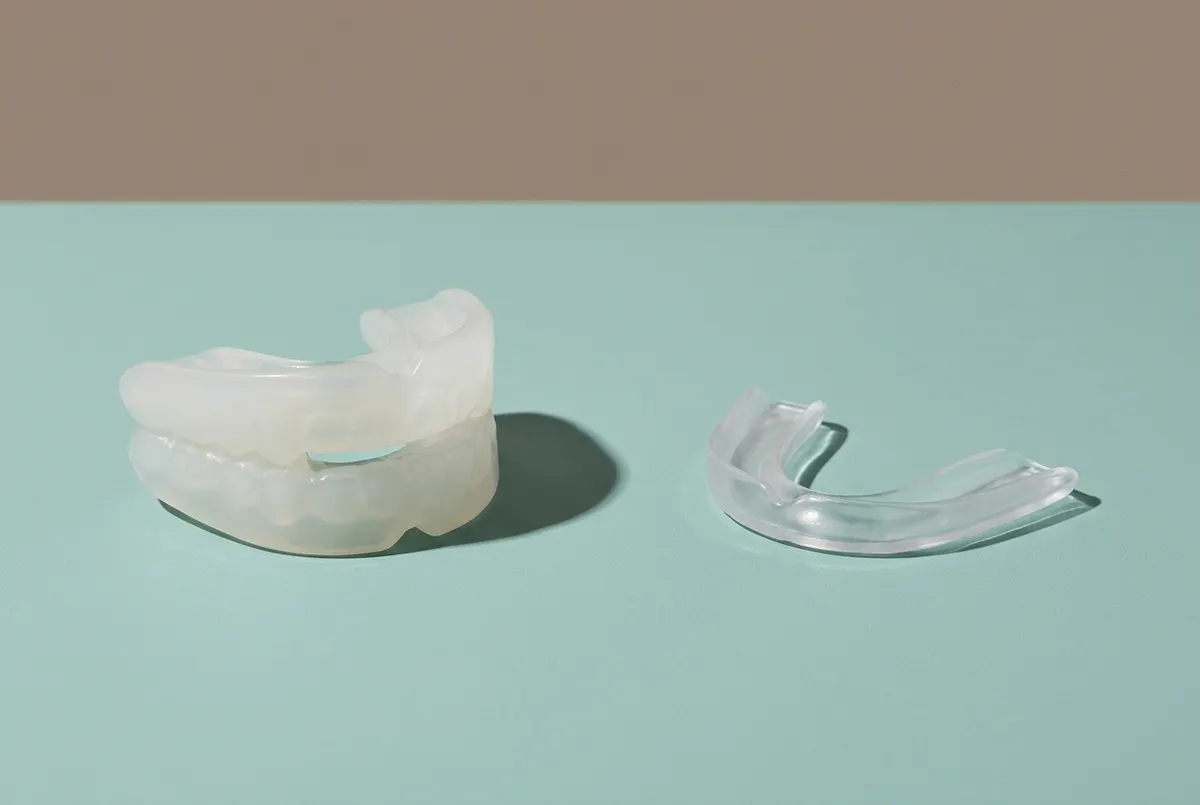 🔒 Holds All Night
5
🔒 Holds All Night
5
The Jaw Has to Move Forward — But Not Every Guard Holds It There
Most pharmacy trays do push the jaw forward on paper. The problem is keeping it there all night. A loose fit slips out. A design without a guidance system lets the jaw drift back the moment you shift position. The clinical approach uses a dorsal fin system — the upper blocks sit behind lower fins to lock the jaw in place, the same mechanic dentists use in fitted devices. Move the jaw, then hold it moved. Both steps matter.
Learn the Mechanics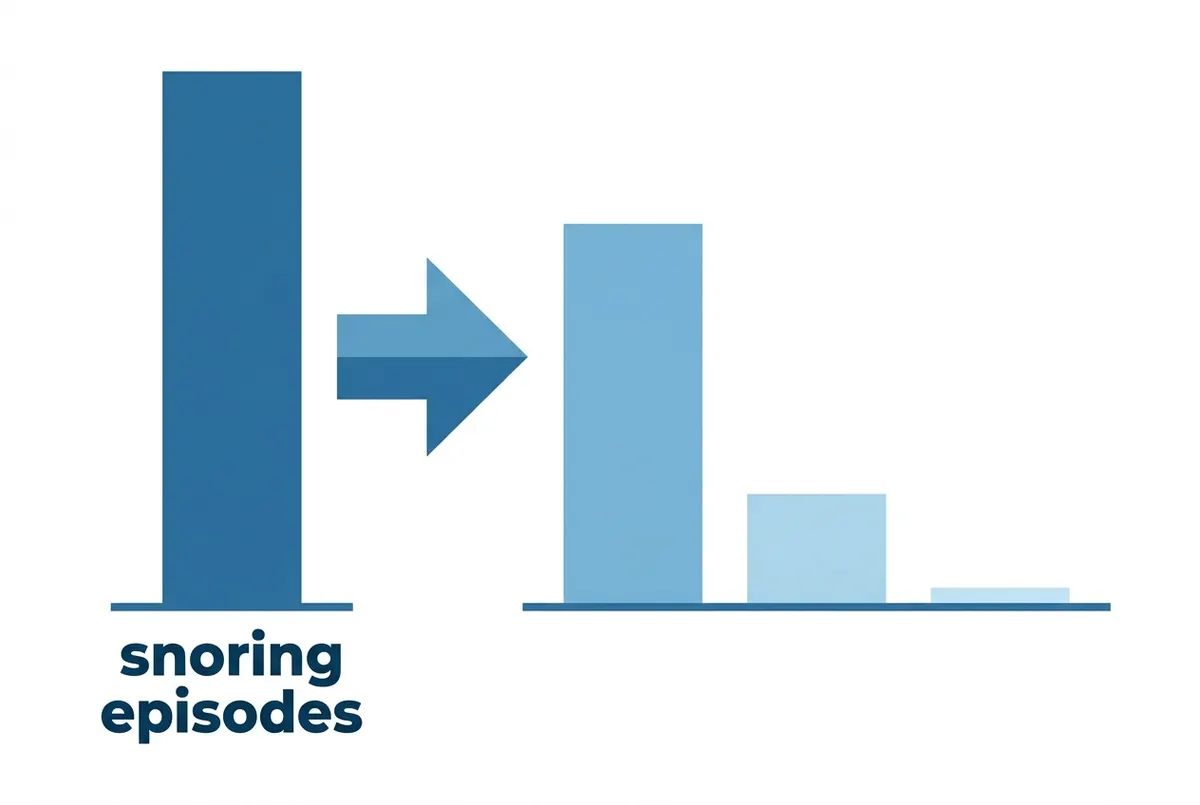 📊 Clinically Proven
6
📊 Clinically Proven
6
Nobody Measured Whether Your Last Eight Guards Actually Worked
After eight failed attempts, you've earned the right to demand proof. The guards you tried were sold on a promise, not a result — nobody ran a sleep study to confirm they reduced your snoring episodes. The devices worth your money are tested against the real thing. Researchers have studied mandibular advancement designs in 18 independent clinical trials, with randomised controlled studies showing 96% fewer snores per hour and success rates topping 65%. That's not marketing. That's what happens when a device is built on evidence instead of hope.
See the Studies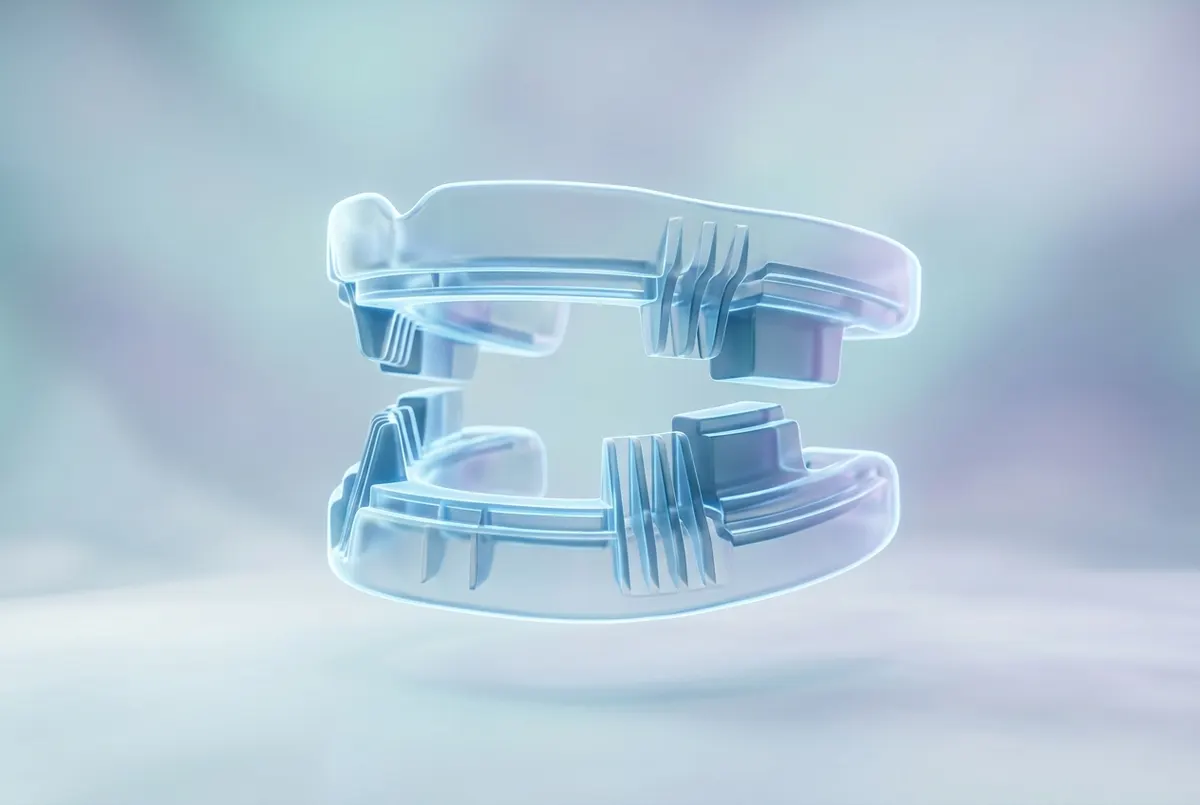 ✅ Risk-Free Trial
7
✅ Risk-Free Trial
7
You Can Try It for 14 Nights and Return It If It Doesn't Work
The better manufacturers don't ask you to gamble $139 on their word. They let you test it for two full weeks — long enough to mould it, adjust it, and see whether your snoring actually drops or your partner stops nudging you awake at 3am. If it doesn't work, you get your money back. No restocking fee. No fine print. 80% of people who try a properly designed mandibular advancement device stick with it because it works from the first night. The trial removes the risk. You've been burned before. This time, the proof is your own sleep.
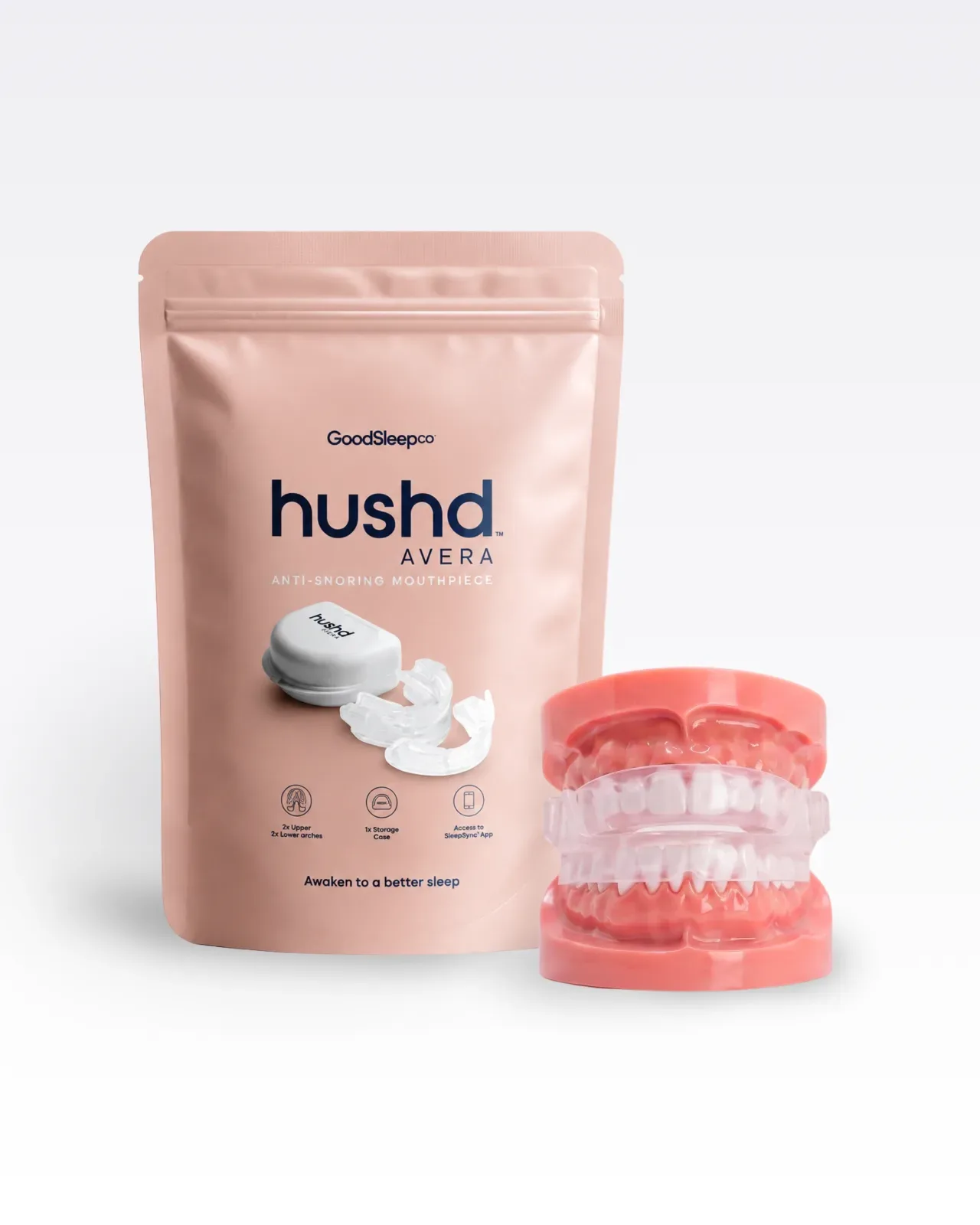
Try It 14 NightsMeet Hushd Avera
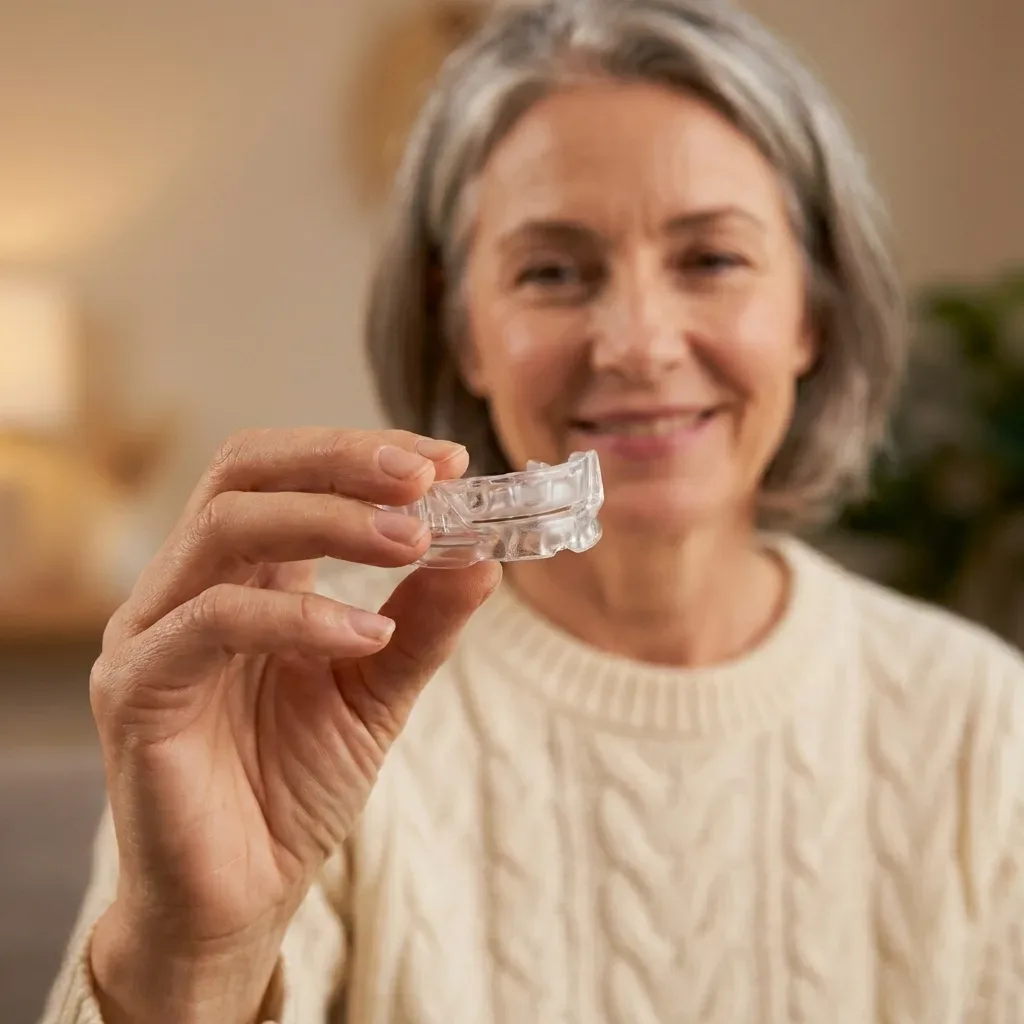
This device was built around what failed guards missed.
The device uses two slim arches instead of one bulky block, so your mouth can open and your jaw can shift — the same guidance system found in dentist-fitted devices. It moulds to your bite in about two minutes at home, and two click-in settings let you advance the jaw further until the snoring stops.
That design is why a randomised controlled trial recorded 96% fewer snores per hour — from 398 episodes a night down to 17 — and why it holds up for six months or more. It is registered and cleared for snoring, backed by research into jaw-advancement device design., at a fraction of a custom dental device's cost. After eight guards that did nothing, this is the one built to actually move your jaw.
Try Avera for 14 Nights, Risk-Free
What are people saying about Hushd Avera?
The people most worth hearing from are the ones who'd already given up — the serial guard-buyers who assumed nothing would work. Here's what changed once the jaw actually moved.
Try Hushd Avera
Questions people ask before they buy
If you've been burned before, you're right to have questions. Here are the ones that come up most — how it's different from the guards that failed, whether it's comfortable, and what happens if it doesn't work for you.